
Best Career Options After 12th Science in India – Courses and Career Pathways
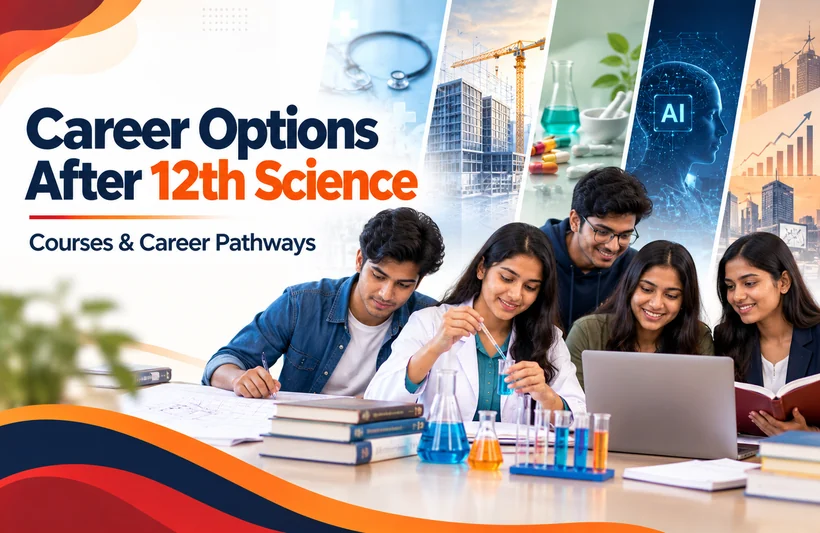
Best Career Options After 12th Science in India – Courses and Career Pathways
Choosing a career after Class 12 Science is an important decision that can influence a student's higher education and professional future.
Students can explore career pathways in Engineering, Medicine, Pharmacy, Computer Applications, Artificial Intelligence, Data Science, Management, research and several other fields.
However, the best career option after 12th Science depends on individual interests, academic strengths, subject eligibility and long-term goals.
This guide from Sapkal Knowledge Hub, Nashik, introduces different career options after 12th Science in India and explains how students can make informed decisions.
Understanding Career Options After 12th Science
Science students commonly study Physics, Chemistry and Mathematics (PCM), Physics, Chemistry and Biology (PCB), or all four subjects (PCMB).
These subject combinations influence eligibility for different undergraduate programmes.
Students should always verify the current admission requirements of their preferred course and institution.
1. Engineering and Technology
Engineering is a professional education pathway for students interested in technology, scientific problem-solving, infrastructure and technical systems.
Popular undergraduate engineering branches include Computer Engineering, Mechanical Engineering, Civil Engineering, Electrical Engineering and Electronics & Telecommunication Engineering.
Engineering graduates may explore eligible roles in software, manufacturing, infrastructure, electronics, energy and other industries.
Admissions and eligibility depend on the applicable examination and regulatory requirements.
2. Artificial Intelligence and Data Science
Artificial Intelligence (AI) and Data Science focus on programming, mathematics, data analysis and computational methods.
Students interested in these fields can explore relevant engineering programmes and other recognised computing degrees.
Career areas may include data analysis, machine learning, software development and AI-related applications.
Advanced roles often require additional technical skills, projects or specialised education.
3. Medical and Healthcare Careers
Students interested in healthcare may explore Medicine, Dentistry, Nursing, Physiotherapy and other recognised health-related programmes.
Examples include MBBS, BDS, B.Sc. Nursing and Bachelor of Physiotherapy, subject to the applicable course regulations.
Admission examinations, educational qualifications and professional registration requirements differ between programmes.
Students should consult the relevant regulatory authorities before applying.
4. Pharmacy Courses After 12th Science
Pharmacy is an educational pathway for students interested in medicines, pharmaceutical sciences and healthcare.
Common courses include Bachelor of Pharmacy (B.Pharm) and Diploma in Pharmacy (D.Pharm).
Pharmacy education introduces subjects related to medicines, formulations, drug actions, analysis and professional practice.
Eligible graduates may explore further education or pharmacy-related careers, subject to applicable qualifications and registration requirements.
5. Bachelor of Computer Applications (BCA)
BCA is an undergraduate programme focused on computer applications and computing concepts.
Students may study programming, databases, software development and other computer-related subjects.
Depending on their skills and further education, graduates may explore IT, software development, web development and related career fields.
Eligibility and programme duration depend on the university and applicable academic regulations.
6. Management and Business Education
Science students interested in business, marketing, entrepreneurship or organisational management can explore eligible undergraduate management courses.
Bachelor of Business Administration (BBA) is one possible option.
Management education introduces concepts such as business operations, marketing, finance and organisational behaviour.
Students should confirm programme eligibility and recognition before applying.
7. Pure Science and Research
Students interested in scientific investigation can explore undergraduate degrees in Physics, Chemistry, Mathematics, Biology and related fields.
These courses can provide foundations for postgraduate education, research and specialised scientific careers.
Research-oriented positions often require further qualifications and relevant experience.
8. Agriculture and Environmental Sciences
Students interested in agriculture, natural resources or environmental issues may consider relevant undergraduate science programmes.
Depending on eligibility, options may include Agriculture, Environmental Science and other related disciplines.
Career opportunities vary according to the qualification, specialisation and employer requirements.
9. Architecture and Design
Students interested in mathematics, creativity, design and the built environment may explore Architecture and appropriate design programmes.
Architecture has specific eligibility and admission requirements.
Students should review official regulatory guidance and the recognised programme structure before applying.
10. Career Options After 12th PCM
Students with Physics, Chemistry and Mathematics can explore several technical and scientific pathways.
These may include:
-
Engineering and Technology
-
Computer Science and Computer Applications
-
Artificial Intelligence and Data Science
-
Mathematics and Physical Sciences
-
Architecture, subject to eligibility
-
Other eligible professional programmes
The right choice depends on the student's aptitude and interests.
11. Career Options After 12th PCB
Students with Physics, Chemistry and Biology may explore different life-science and healthcare-related pathways.
Possible options include:
-
Medicine and Dentistry, subject to entrance requirements
-
Pharmacy
-
Nursing and allied healthcare programmes
-
Biotechnology and Life Sciences
-
Microbiology and Biochemistry
-
Other eligible science programmes
Students should not assume that every healthcare course has the same admission criteria.
12. How to Choose the Right Career After 12th Science
Before selecting a course, students should evaluate the subjects they enjoy, their academic strengths and the skills they want to develop.
Consider the following questions:
-
Am I interested in computers, healthcare, science or business?
-
Do I enjoy mathematics, biological sciences or practical work?
-
What will I study throughout the course?
-
What qualifications are required for my preferred profession?
-
Can my family manage the total education expenses?
-
Does the institution provide appropriate academic and practical learning opportunities?
Students should also compare course recognition, college affiliation, learning resources and career guidance.
13. Importance of Practical Skills Alongside Education
Academic qualifications provide a foundation for professional learning, but practical skills also matter.
Students can develop communication, critical thinking, problem-solving, teamwork and digital literacy.
Depending on the course, projects, internships and supervised practical activities may help strengthen these abilities.
Career preparation should involve continuous learning rather than depending solely on a degree certificate.
14. Career Guidance and Trusted Information Sources
Students should research courses using official university, regulatory and admission websites.
The Government of India's National Career Service portal provides information about careers, employment services, skill development and career guidance.
Career counselling can also help students explore options based on their individual interests and strengths.
15. Exploring Educational Pathways at Sapkal Knowledge Hub, Nashik
Sapkal Knowledge Hub brings together educational institutions offering professional programmes in different fields.
Students can explore Engineering, Pharmacy, Computer Applications and Management-related education through the relevant institutions.
Those interested in Engineering can review Late G. N. Sapkal College of Engineering.
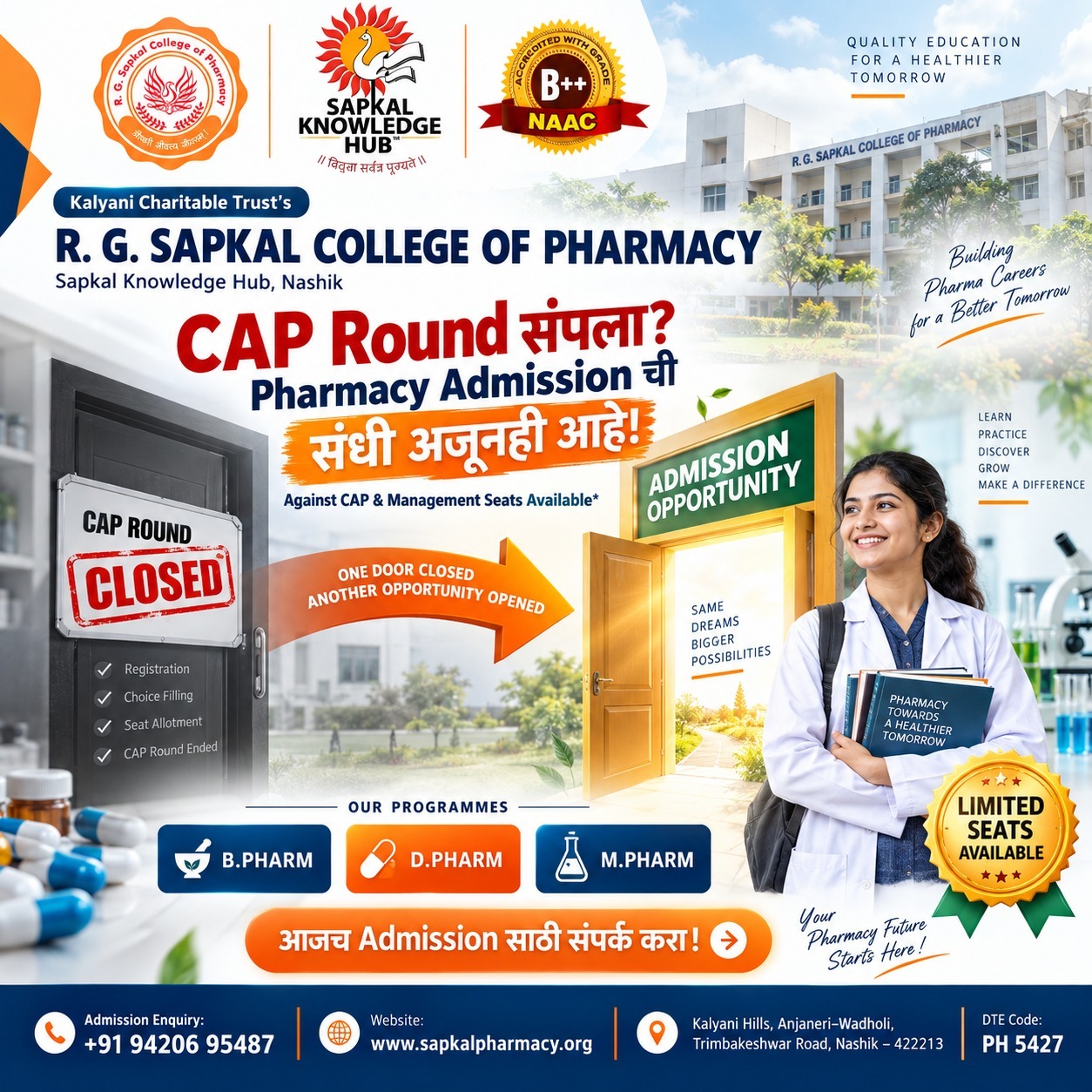
Students considering Pharmacy can explore R. G. Sapkal College of Pharmacy and R. G. Sapkal Institute of Pharmacy.
Students interested in Computer Applications or Management can review K. R. Sapkal College of Management Studies.
Admission eligibility, approved programmes, fees and current availability must be verified with the respective institute.
Conclusion
There is no single career after 12th Science that is suitable for every student.
Engineering, Medicine, Pharmacy, Computer Applications, Management, scientific research and other fields offer different educational and professional pathways.
Students should choose a course based on interests, subject eligibility, academic strengths and realistic career goals.
Understanding the available options and researching institutions carefully can help students make informed higher education decisions.
Frequently Asked Questions
1. What are the best career options after 12th Science in India?
Popular options include Engineering, Medicine, Pharmacy, Computer Applications, Life Sciences, Management and other professional programmes, depending on student interests and eligibility.
2. What courses can PCM students pursue?
PCM students may explore Engineering, Computer Science, Mathematics, Physical Sciences, Architecture and other eligible courses.
3. What courses can PCB students pursue?
PCB students may explore Medicine, Dentistry, Pharmacy, Nursing, Biotechnology, Life Sciences and other eligible programmes.
4. Can Science students choose BCA after 12th?
Yes, where they meet the university or institution's BCA admission eligibility requirements.
5. Can Science students pursue Management courses?
Yes. Science students may apply for relevant undergraduate Management programmes when they satisfy the prescribed eligibility criteria.
6. How should students choose a career after 12th Science?
Students should consider their interests, academic strengths, course syllabus, recognition, affordability and long-term professional goals.