

Engineering vs Pharmacy: Which Career Path Should You Choose?
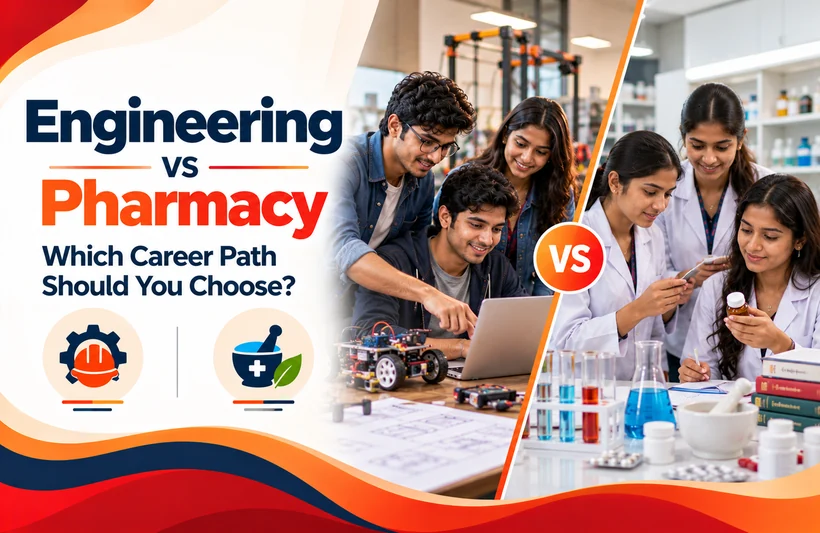
Engineering vs Pharmacy: Which Career Path Should You Choose?
Choosing the right career after Class 12 Science is an important decision for students planning higher education.
Engineering and Pharmacy are two professional education pathways that offer different academic experiences, specialised skills and career opportunities.
Students often compare Engineering vs Pharmacy to understand which course better matches their interests, academic strengths and future goals.
This guide from Sapkal Knowledge Hub, Nashik, explains the differences between Engineering and Pharmacy to help students make informed decisions.
1. What Is Engineering?
Engineering is a field that applies scientific and mathematical principles to design, develop and improve technologies, products, systems and infrastructure.
Engineering students can specialise in areas such as Computer Engineering, Mechanical Engineering, Civil Engineering, Electrical Engineering and Electronics.
Different branches involve different academic subjects and practical applications.
2. What Is Pharmacy?
Pharmacy is a professional field focused on medicines, pharmaceutical sciences, drug development and responsible pharmaceutical practice.
Students study subjects such as Pharmaceutics, Pharmaceutical Chemistry, Pharmacology and Pharmacognosy.
Pharmacy education combines scientific knowledge with laboratory learning and professional responsibilities.
3. Engineering Courses After 12th Science
Students interested in Engineering generally explore Bachelor of Engineering (B.E.) or Bachelor of Technology (B.Tech) programmes.
These typically have a duration of four academic years for regular entry.
Different engineering branches focus on areas such as software, electronics, manufacturing, infrastructure and emerging technologies.
Students should review the applicable admission requirements before selecting a branch.
4. Pharmacy Courses After 12th Science
Common pharmacy courses include Bachelor of Pharmacy (B.Pharm) and Diploma in Pharmacy (D.Pharm).
B.Pharm is generally a four-year undergraduate degree, while D.Pharm is a two-year diploma with additional prescribed practical training requirements.
Students interested in pharmaceutical sciences can choose an eligible educational pathway according to their qualifications and goals.
5. Engineering vs Pharmacy: Course Comparison
| Factor | Engineering | Pharmacy |
|---|---|---|
| Primary focus | Technology, design and applied science | Medicines and pharmaceutical science |
| Common degree | B.E. / B.Tech | B.Pharm |
| Typical degree duration | Four years | Four years |
| Major subjects | Mathematics and branch-specific technical subjects | Pharmaceutics, Chemistry, Pharmacology |
| Practical learning | Technical laboratories, design and projects | Pharmaceutical laboratories and prescribed practicals |
| Career areas | Technology, manufacturing and infrastructure | Pharmaceutical industry and healthcare |
| Higher studies | M.E., M.Tech and related programmes | M.Pharm and other eligible programmes |
The exact syllabus and requirements depend on the institution and applicable regulations.
6. Eligibility for Engineering Admission
Engineering admission requirements vary by programme, branch, entrance examination and candidature category.
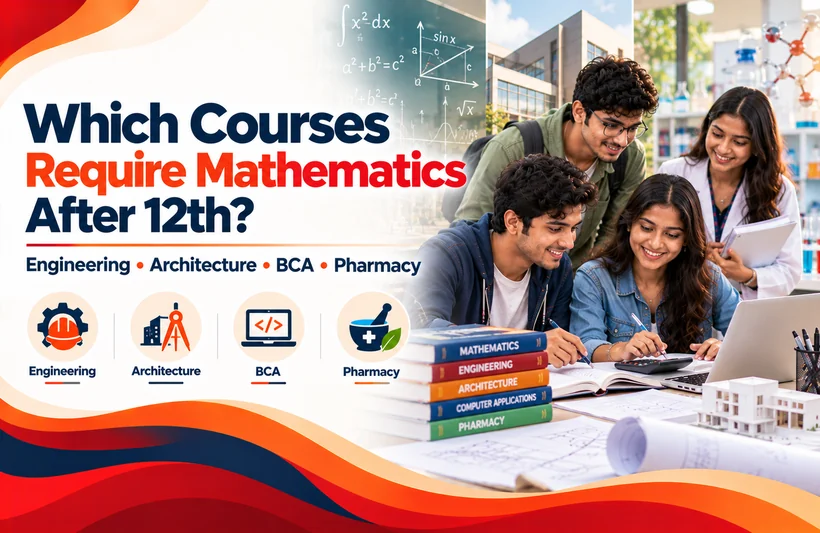
Mathematics is important for many engineering pathways, but students should not assume identical subject requirements for every branch.
In Maharashtra, eligible candidates must follow the relevant State CET Cell admission rules.
The latest official information brochure should be checked before applying.
7. Eligibility for Pharmacy Admission
The Pharmacy Council of India's B.Pharm regulations specify Physics and Chemistry along with Mathematics or Biology at the qualifying level, subject to other requirements.
This means eligible students from different Science subject combinations may explore B.Pharm.
Students must also satisfy applicable entrance examination and admission conditions.
8. Importance of Mathematics in Engineering
Mathematics supports many engineering subjects, including calculations, modelling, algorithms and technical design.
Students interested in programming, electronics or mechanical systems often encounter mathematical problem-solving.
A strong willingness to learn mathematical concepts can help students approach technical subjects confidently.
9. Importance of Chemistry and Biology in Pharmacy
Pharmacy education includes pharmaceutical chemistry, biological systems and the scientific properties of medicines.
Students interested in medicines, healthcare and laboratory science may find these subjects engaging.
However, Pharmacy is not limited to Biology; it also involves calculations, chemistry and analytical reasoning.
10. Practical Learning in Engineering
Engineering education includes technical laboratories, projects and design-related activities.
Depending on the branch, students may study software development, circuits, machines, construction methods or data analysis.
Practical learning can help connect classroom knowledge with technical applications.
11. Practical Learning in Pharmacy
Pharmacy students study formulation principles, pharmaceutical analysis and other laboratory-based subjects.
Practical learning helps develop scientific observation, accurate measurement and documentation skills.
Students must follow prescribed laboratory procedures and applicable safety requirements.
12. Career Opportunities After Engineering
Engineering graduates may explore professional opportunities related to their branch and skills.
Potential career areas include:
-
Software development and information technology
-
Artificial Intelligence and Data Science
-
Manufacturing and production
-
Civil infrastructure and construction
-
Electronics and electrical systems
-
Technical design and research
Specific jobs depend on technical competencies, qualifications and employer requirements.
13. Career Opportunities After Pharmacy
Pharmacy graduates may explore opportunities in pharmaceutical and healthcare-related fields.
Possible career areas include:
-
Pharmaceutical manufacturing
-
Quality Control and Quality Assurance
-
Pharmaceutical research
-
Regulatory Affairs
-
Hospital and community pharmacy
-
Pharmaceutical sales and marketing
Professional pharmacist roles require compliance with applicable registration regulations.
14. Engineering vs Pharmacy: Which Has Better Career Scope?
Neither Engineering nor Pharmacy offers guaranteed employment or higher earnings.
Career opportunities depend on specialisation, qualifications, skills, work experience and market conditions.
Students should compare actual job requirements rather than relying only on salary advertisements.
Choosing a field that matches individual interests can make long-term learning more meaningful.
15. Higher Education After Engineering
Engineering graduates may explore recognised postgraduate programmes such as M.E. or M.Tech, subject to eligibility.
Other pathways may include management education, specialised certifications and research programmes.
The appropriate route depends on the student's career goals.
16. Higher Education After Pharmacy
Eligible B.Pharm graduates may explore Master of Pharmacy (M.Pharm) programmes in relevant specialisations.
Other recognised educational pathways may be available depending on qualifications and admission requirements.
Students should confirm regulatory recognition and programme eligibility before enrolling.
17. Skills Required for Engineering Students
Engineering students benefit from analytical thinking, problem-solving and technical knowledge.
Programming, design, mathematics and project management may be important depending on the branch.
Communication and teamwork are also useful in professional settings.
18. Skills Required for Pharmacy Students
Pharmacy students benefit from scientific reasoning, laboratory accuracy and pharmaceutical knowledge.
Important professional abilities include documentation, ethical awareness, communication and attention to detail.
Specific roles may require additional technical training or professional registration.
19. How to Decide Between Engineering and Pharmacy
Students can ask themselves:
-
Am I more interested in technology or pharmaceutical science?
-
Do I enjoy Mathematics, Chemistry or Biology?
-
Would I prefer technical design work or medicine-related scientific learning?
-
What subjects will I study throughout the programme?
-
What qualifications are required for my intended career?
-
What are the total education costs and higher-study options?
The decision should be based on realistic interests and verified course information.
20. Engineering and Pharmacy at Sapkal Knowledge Hub Nashik
Sapkal Knowledge Hub brings together educational institutions offering Engineering and Pharmacy programmes.
Students interested in Engineering can explore Late G. N. Sapkal College of Engineering.
Those interested in Pharmacy can review R. G. Sapkal College of Pharmacy and R. G. Sapkal Institute of Pharmacy.
Students should confirm current courses, eligibility, fees and admission procedures through the respective institution.
Conclusion
Engineering and Pharmacy are different professional fields with distinct academic subjects and career pathways.
Engineering may appeal to students interested in technology, mathematics, design and technical problem-solving.
Pharmacy may appeal to students interested in medicines, chemistry, healthcare and pharmaceutical sciences.
The right choice depends on individual interests, academic strengths, eligibility and long-term goals.
Frequently Asked Questions
1. Which is better after 12th Science: Engineering or Pharmacy?
Neither is universally better. The right choice depends on interests, academic strengths, eligibility and career goals.
2. Can PCB students apply for Pharmacy?
Yes. PCB students may meet the B.Pharm Science-subject requirement, subject to other applicable admission conditions.
3. Can PCB students apply for Engineering?
Eligibility depends on the engineering branch and current admission rules. Students should check the official course-specific requirements.
4. Is B.Pharm a four-year course?
Yes. The regular Bachelor of Pharmacy programme has a duration of four academic years.
5. Can Engineering graduates work in the pharmaceutical industry?
Some technical and engineering positions exist in pharmaceutical organisations, subject to relevant qualifications and skills.
6. Where can students explore Engineering and Pharmacy at Sapkal Knowledge Hub?
Students can visit the individual Engineering and Pharmacy college websites through the official Sapkal Knowledge Hub portal.